
Ruellia simplex
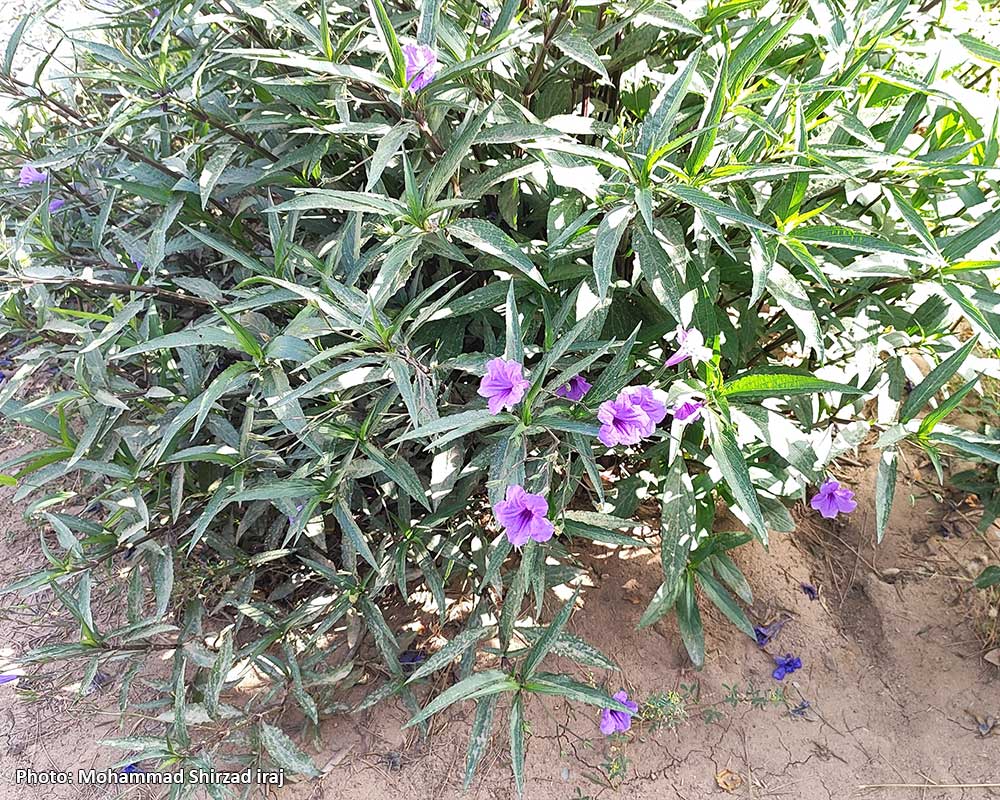
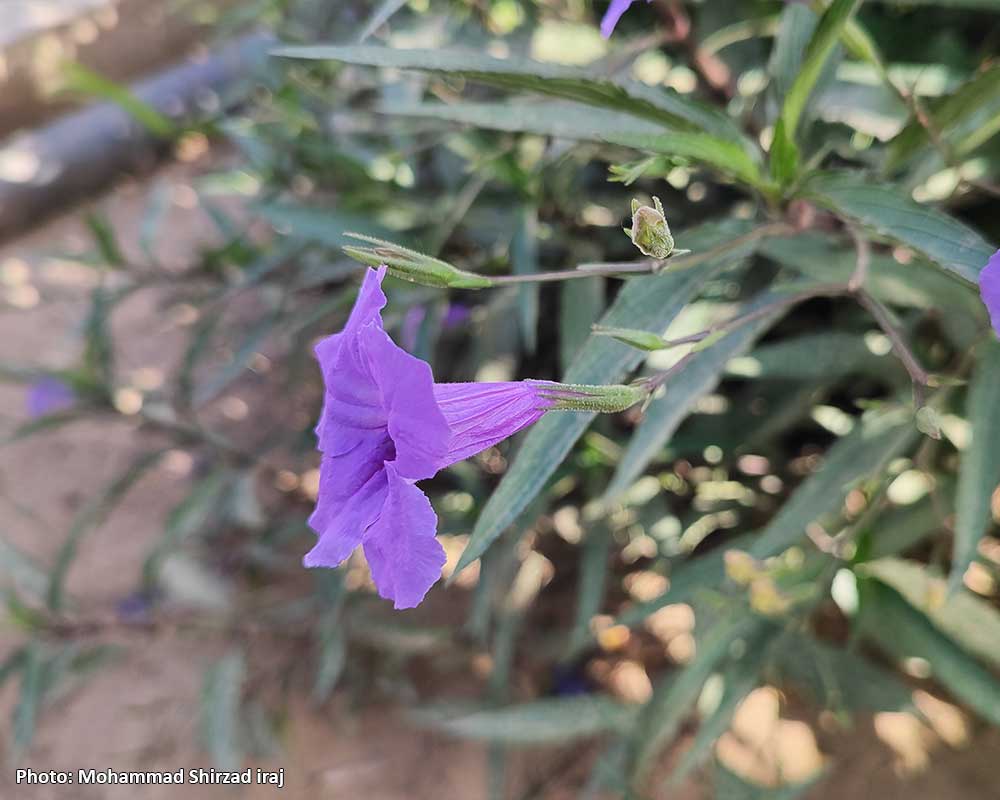
Ruellia simplex
Yazd & Isfahan province , Iran
Elevation 1110m
(December14, 2025) – (May 28, 2026)
Description
Kingdom: Plantae
Phylum: Magnoliophyta
Class: Angiospermae
Order: Lamiales
Family: Acanthaceae
Genus: Ruellia
Species: Ruellia simplex
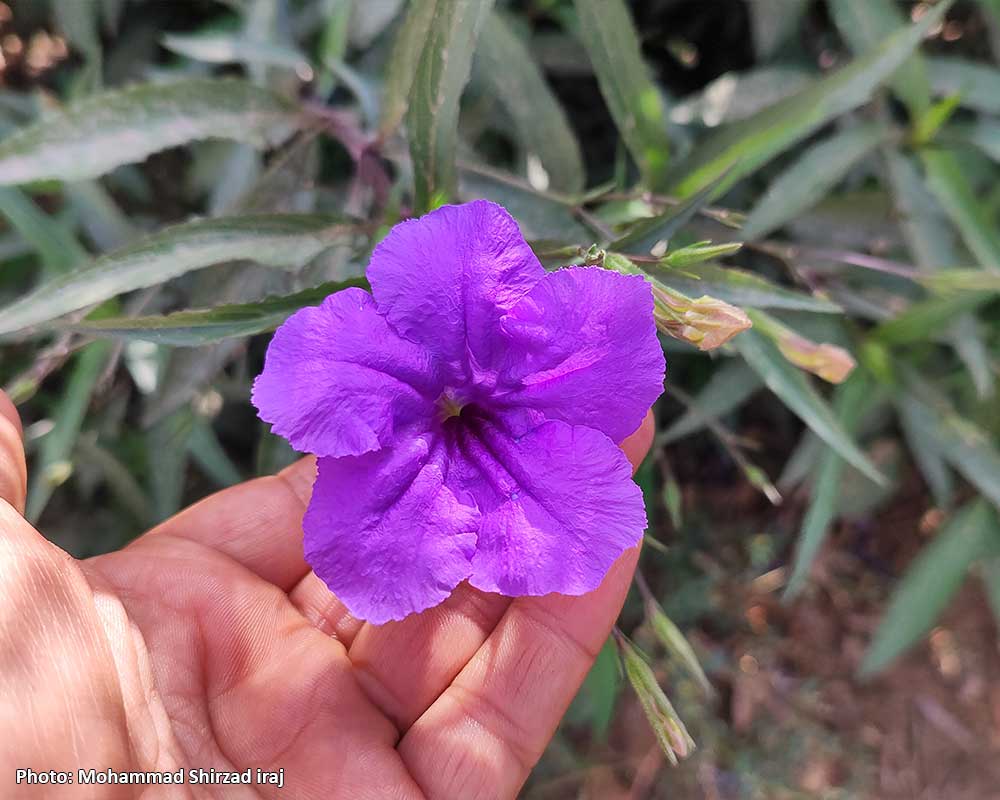
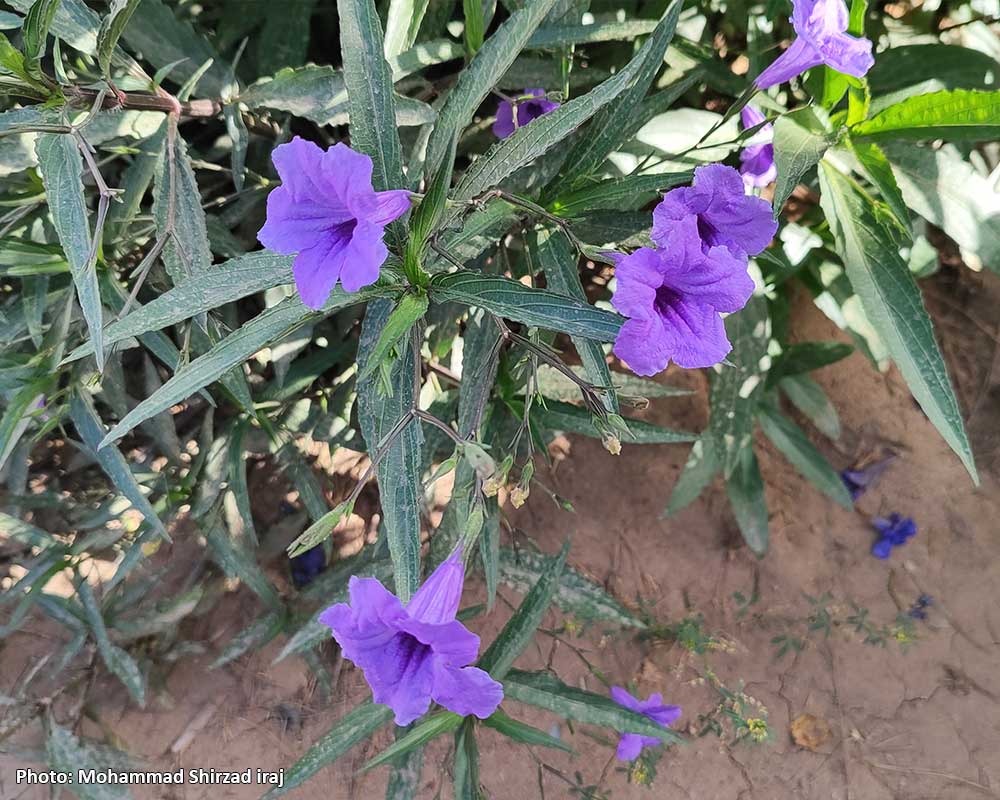
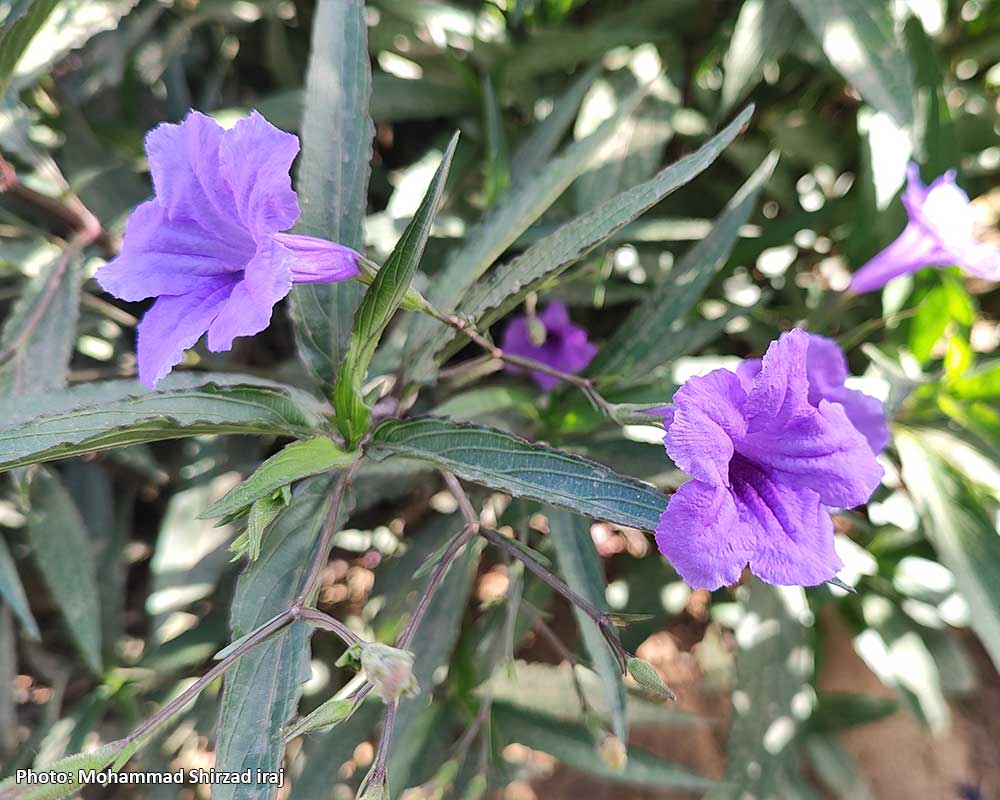
Mexican petunia is an ornamental herbaceous perennial of the Acanthaceae family. It is shrubby with a woody base and somewhat aggressive. The plant typically grows to 3 to 4 feet tall in the wild, but only to 2 or 3 feet tall in gardens. It has linear, dark green leaves that may be tinged with purple, and measure 6 to 12 inches long and 0.75 inches wide. The flowers are petunia-like, lavender to violet, and only last one day. It is hardy in zones 8 through 10 and is evergreen in warm climates. It is an excellent annual flowering plant in colder climates.
This plant is native to Central and South America and the Caribbean. Mexican petunia plants will spread by rhizomes and self-seeding in the garden and have aggressively naturalized in South Carolina, Texas, and Hawaii. Although this plant has excellent flowering attributes, this species is currently listed as a Category One invasive species by the Florida Exotic Pest Plant Council (FEPPC) because it has been found to invade natural areas and displace native flora in the State of Florida.
The genus name, Ruellia, honors a French herbalist and physician, Jean de la Ruelle. The epithet, simplex, references its simple leaves. There has been confusion over the correct epithet, and it has had several different names over the years. Ruellia simplex is preferred since that was the original name given when it was first described in Cuba in 1870.
Mexican petunia prefers medium to wet soil that is fertile, well-drained, and flowers best in full sun. Mexican petunia is a tolerant plant. It is willing to grow in boggy wet conditions, in soil that varies from wet to dry, and tolerates high heat and humidity. Once established, the plant does well in drought conditions. It is seldom damaged by deer.
Cut back stems after flowering to encourage new flowers. They are easily propagated by cuttings, division, and seed. Keep in mind that some cultivars are sterile (‘Purple Showers’), in which case they may be spread by rhizomes.